
If black metal is all about uncompromising bands that are musically extreme with behaviour to match, then Slagmaur must rank in the top five. A discography full of albums that repeatedly push the boundaries of black metal coupled with on, and off-stage antics that would frighten any self-respecting satanist, this is a band who hung a man on an inverted cross and then set fire to him. Not surprisingly, it left audience members feeling “serious discomfort”! Just a normal day in the Slagmaur ranks.
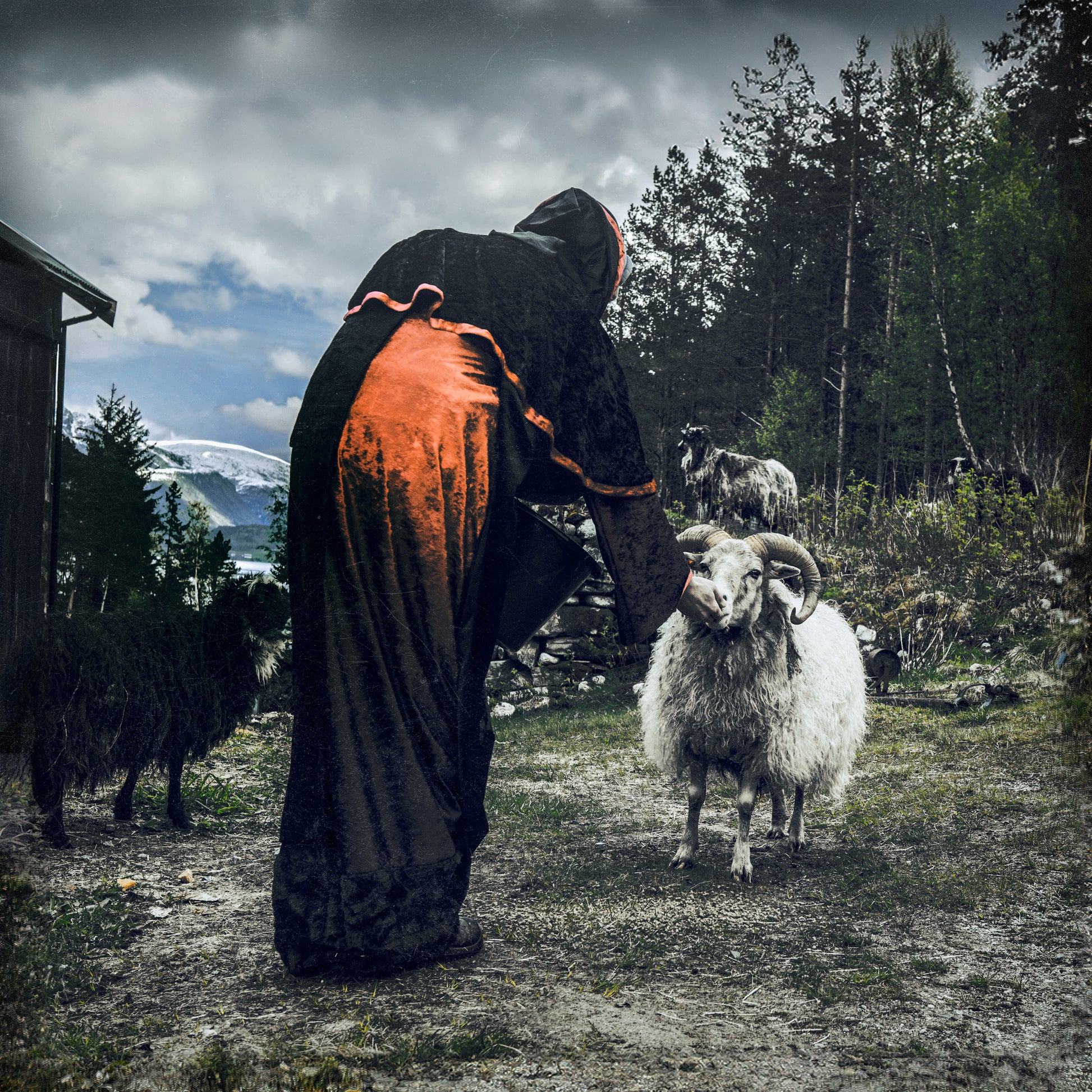
Hulder’s Ritual continues the uncompromising musical approach, but this time it’s wrapped in what can only be described as a work of art. Each track, hell, each note, is carefully linked to an overarching theme that explores the dark Norwegian myth and folklore of the Hulder, (or Huldra), seductive supernatural beings (mostly women) that lure and abduct men and children. ‘Disappearance’, in all its forms, is not just a major theme running through the album, but is also part of the product itself. This isn’t quite a concept album, but the links and intertwining of songs and symbols gives the appearance of a spider’s web, connected, but each part separate. The album is steeped in tales of witches, malevolent beasts, magic, and chaos, but also children’s lullabies, and exists in the same plane as Ulver’s Bergtatt album of 1995. However, it is the theme of disappearance that haunts the album, a conjuring trick, or something more profound – the disappearance of truth in a world saturated by ‘fake news’. To that end, General Gribbsphiiser, real name Rune Røstad, and the legendary Snorre Ruch, went ‘missing’ whilst hiking in the Varghiet mountains in Norway. Of course, they were never missing, and some described it as a publicity stunt for the new album, whilst Slagmaur’s label, Prophecy, called it a ‘social experiment’; whichever, it did raise questions about ‘truth’, especially since the internet went wild with each update sourcing grimmer and more serious. Musically, the staged act linked directly to the themes of the album, and you begin to question whether these myths aren’t fictions after all, just how many people do go missing without a trace around the world each year?
Let’s not go down that rabbit-hole and focus on the music instead. Ritual Dogs sets the mood musically and thematically. In Norwegian and broader Norse mythology and Viking-age practice, dogs held a dual role as revered, loyal companions and as liminal, symbolic creatures often associated with death, protection, and the underworld. They were frequently buried with their owners, particularly in Viking boat graves, to act as guardians or guides in the afterlife. To further this connection, Rune’s own dog, Troy Nagel Kirkebrenner, passed away during the recording of the album, and Rune stated in an emotional Instagram post, that “Slagmaur’s Ritual Dog passed away yesterday. Seven years in the making, he came into this world and followed the recording of Hulder’s Ritual to the very end.” A loyal companion indeed. No atmospheric synths or church bells ringing here, Ritual Dogs bursts into a treble-laden, ascending riff and blast beats, punctuated with a scream from the depths of hell. The Dogs here guard these gates of hell and what emerges is a demon of sorts, surveying all before him with disdain and malice and the vocals throughout have a demonic quality, unsettling and powerful. The riff is hypnotic (the album is full of treble-heavy riffs and Rune said to me that he is considering, after all these years, the use of more mid-range), and it never lets up. Shouted vocals, barking orders and the fury of the beast are accompanied by a deeper riff, but it’s the original riff that continues unabated. A wonderful menacing synth supports the cacophony, and the drumming is strange, distorted and follows an interesting beat, almost jazz in its execution. Indeed, all instruments are played by Rune which perhaps explains the length of time this album took to make. It’s a great opening statement and ends a s abruptly as it started – a real punch in the face.
Wildkatze starts with another treble heavy, progressive riff, before squealing feedback and the rest of the band join in. It is a driving track, and the vocals, although harsh, rasping, and violent, seem to be reciting a perverted lullaby. In mythology the Wildcat is often portrayed as a solitary, untameable, and elusive creature, symbolising the untamed wilderness; no cuddly domestic cat then. Is it a stretch to link this to werewolves? Probably not as Slagmaur has visited that territory in the past. The riff, drums, and vocals are relentless, feral, and twisted, not in a discordant way, but the effect is disorientating to a degree, but the restless momentum sweeps you away with the anger and malcontent. Again, the drums seem to follow their own beat, not adhering to the traditional blast beat pattern of black metal. This underpinning gives the track its strangeness and the beat sounds more threatening than the traditional. The vocals seem schizophrenic as two sets of vocals blend into one another perhaps representing the duality of a werewolf. The riff is impossible to deny, unrelenting and powerful, whatever the drums do the riff continues over them. The vocals are so harsh as to be uncomfortable, deadly and slightly psychotic. The track builds and builds powerfully, gaining speed (seemingly) and volume, there is no rest bite and it feels as if you are being hunted.
We come, next to one of two stand out tracks, Huldergeist. The meaning of aHulder (or Huldra) is a seductive, supernatural forest creature from Scandinavian folklore, often associated with mountains, caves, and “hidden” places. This beautiful forest spirit (often a woman with a cow’s or fox’s tail) lures men into the mountains or forests, sometimes taking them “into the mountain” to live – Bergatt (Mountain-taken) makes an appearance again. Prophecy further explains: “The album’s name refers to a female spirit or fay being that is common in Nordic folklore. Mostly associated with the forest, the relationship of these seductive creatures with humans differs in local tradition and ranges from beneficial to outright evil: abducting and murdering men or replacing human children with their own misshapen get.”[1]
Cue another superb riff opening the track, supported by crashing chords which takes a full minute of the track before an eruption of children shouting and screaming and the explosion of drums. The children’s shouts/screams (performed by Rune himself!), tread the line between innocent play and outright horror – you make your mind up which.
The barked vocals seem like a nightmare nursery rhyme pummelled by the repetitive riff which drives the track with power on malevolence. It’s heavy, man is it heavy, and it gains speed, or at least that’s the impression. More riffs, variations on a theme, and then a sudden stop with yet another riff backed by the heaviest chords I’ve heard in a long time. Over this the screams and shouts of the children, warning calls, or pleas for help. The tracks seems to stop, but it builds again from yet another set of treble-heavy riffs, a swirling and steady build of intensity, menace, and darkness. The track keeps building and the vocals now are buried in the mix, screaming and howling. If this is abduction then it’s a horrifying one. Just when the tension can not get anymore intense, the track breaks and swerves completely, presenting us with a folk inspired riff, set against clean, chanted vocals, and steady beat. What pushes this track into a higher plane is the appearance of a female voice, beguiling, seductive, imploring us to follow her, scary as hell and addictive, the voice is everything we are warned as children but one which nevertheless entices us to follow. A beautiful yet terrifying female scream and the sudden end of the track. Heady stuff.
Hexen Herjer (Witches Raid or Witches Ravage/Wreak Havoc or even to wage war) is linked to the concept of herja (to plunder/ravage) and is connected to the imagery of Einherjar (the chosen slain in Norse mythology). According to General Gribbsphiiser, the song relates to “The Eagle Abduction of Leka” a famous 1932 legend where a child was carried away by a white-tailed eagle. Yet, while rooted in the Leka incident, the song evokes a sense of dread and dark, ancient, and untamed nature. Moreover, as General Gribbsphiiser explains, “After an intense search, the girl was found alive on a cliff ledge. Although the details remain disputed, this event has become a lasting part of Norwegian folklore and local history.”
The track starts with chants and synths and breaks into a murderous riff and rather surprisingly a haunting, eerie, piano, which is both beautiful and surreal (arranged by Snorre Ruch). An almost anthemic riff introduces the harsh vocals again singing an almost lullaby-like pattern. It is the stand-out track of the album; furious, driving, and catchy as hell. The piano juxtaposes so wonderfully with the riffs in a way that is both new and exciting. A chorus of children take up the themes, all the children lost, stolen, abducted, and their refrain is haunting. The more they sing, the more horrifying the track becomes; a sudden stop with angry, raspy guitars, with muted screams and howls that takes into the torture chamber, and a crescendo of anguish and pain. It’s a terrifying yet beautiful song that won’t leave you alone. Literally, it haunts you, and the piano is something from the worst horror-film. Played live (with samples, I would guess) this is going to be a fan favourite. Interestingly, the track doesn’t stop, it grinds to a halt as if the tape was stretched and broken. A wonderful way to end such a great track.
Warlok here is not just a male magician, but a traitor who practices magic and dark rituals. The track is characterized by its intense, dark atmosphere, which mirrors the album’s overall thematic focus on Norwegian folklore of being taken, transported against your will.
We go straight into a driving riff and rhythm, matched by growled vocals, and a great beat juxtaposed by a droning, creepy wall of synths. It’s catchy and anthemic yet scary as hell. This Warlock is a bad ass, no sign of Gandalf here. The growls are contrasted with some clean singing/chanting and this is very effective. The riff, treble-heavy as the rest of the album, is hypnotic, driving the music and backed by a thunderous beat. It is both discordant and unsettling, a mixture of horror and fascination. This is both black metal as we know it and something new. The sudden change of speed and the move into a more atmospheric section is startling and refreshing, breaking off the tension and horror, yet this section brings its own horror, one that creeps up on you, swelling, growing piece by piece like a menacing coda.
The final track on the album is Rathkings, which is defined as a “rat king” (German: Rattenkönig) is a rare and often gruesome phenomenon where a group of rats or mice become bound together at their tails, which are intertwined and often cemented with a sticky substance like sap, gum, blood, faeces, or hair. This creates a single, tangled entity of rodents that are forced to move together. Sometimes one rat will sit above the mass of squirming rats, the “rat king”. The “rat king” is often used as a metaphor for urban decay, a grotesque, singular organism made of multiple, struggling individuals. Quite an image to end the album. Discordant, screeching feedback is set against a pummelling riff which settles into a wonderful and energetic beat. hatred, rage, and anger dominate the track; the destruction of all things. It’s hypnotic, but not in a pleasant way. The torrid screams and growls are matched by an inevitable death. A horrifying, yet apt closing statement, remarkably catchy and urgent. The vocals are demonic, disorientating, discordant; there are hypnotic soundscapes, titanic riffs, and pounding drums, all mixed with grating synths. This is avant garde and it is building into the worst nightmare of your life. Absolutely wonderful stuff.
The General hinted to me that there will be ‘a few gigs’ sometime this year, and with that Slagmaur will bring all its intensity, hatred, brimstone, and fire. Let’s hope no one is burnt this time.
Line-up:
General Gribbsphiiser – all instruments
Dr. Von Hellreich – vocals on Ritual Dogs, Wildkatze, and Warlok,
Guest musicians:
D.G. (MISÞYRMING) – vocals on Huldergeist & Rathkings
Hoest (TAAKE) – vocals on Huldergeist
Maria Charlotte Lund – vocals on Huldergeist
Silenoz (DIMMU BORGIR) – vocals on Rathkings
Snorre W. Ruch (THORNS) – additional producer
Recording by Rune Krieghr Røstad at Nekk Brekk Studio, Fosen (NO)
Mix by Rune Krieghr Røstad at Nekk Brekk Studio, Fosen (NO)
Mastering by Stein Bratland at Skansen Lydstudio, Trondheim (NO)
Artwork by Rune Krieghr Røstad (Storeulv Foto)
Layout by Łukasz Jaszak
Links:
www.facebook.com/slagmaurofficial
www.instagram.com/slagmaur_official
Shoplinks:
https://slagmaur-no.bandcamp.com/album/hulders-ritual
https://spkr.store/collections/slagmaur
Available formats:
“Hulders Ritual” is available as Digipak CD, ltd. Gatefold splatter black & bloodred vinyl LP (400 copies), Gatefold black vinyl LP.
[1] Slagmaur Unleashes a Sublime New Video & Finally Announces a Release Date for ‘Hulders Ritual’
Leave a Reply
You must be logged in to post a comment.